DSN WIRESUN 11 OCT 20260333 UTC
World
ANALYSISOn July 4, 2026, the United States of America celebrates the 250th anniversary of the Declaration of Independence — a milestone known as the Semiquincentennial.
FILED 6 MIN READ
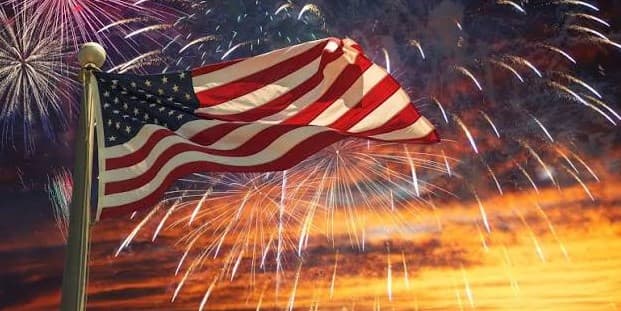
Washington D.C., United States of America — July 4, 2026
Two hundred and fifty years ago today, on a hot Philadelphia afternoon in the summer of 1776, 56 men gathered in Independence Hall and signed a document that changed the world. It began with a single, radical idea — that all men are created equal, endowed with unalienable rights to life, liberty and the pursuit of happiness. That idea became a country. That country became the most powerful nation in the history of human civilization. And today, on July 4, 2026, that nation turns 250 years old.
On July 4, 1776, representatives from the 13 colonies gathered in Philadelphia to formally adopt the Declaration of Independence — a document written primarily by Thomas Jefferson and revised by the Continental Congress over several weeks of debate, argument and compromise.
"With a single sheet of parchment and 56 signatures, America began the greatest political journey in human history," President Trump said of the occasion. The declaration was not merely a statement of separation from Great Britain. It was a philosophical manifesto — an assertion that government derives its legitimate power from the consent of the governed and that when government becomes destructive of the people's rights, the people have the right to abolish it and form a new one.
The men who signed it knew exactly what they were doing. They were committing treason against the British Crown. Many would lose their fortunes. Some would lose their homes. A few would lose their lives. And they signed it anyway.
What followed those 56 signatures is one of the most extraordinary stories in the history of the world.
Thirteen struggling colonies became 50 states stretching from the Atlantic to the Pacific and beyond. A nation of 2.5 million people became a nation of 340 million. The world's first modern democratic republic inspired the French Revolution, shaped the liberal democratic movements of the 19th century and provided the model — however imperfect — for constitutions and bills of rights across the globe.
America fought a civil war that threatened to destroy everything the founders had built — and emerged from it with slavery abolished and the constitutional promise of equality extended, if not yet fully delivered, to all its citizens. It fought two world wars, emerging from each as the decisive force that tipped the balance toward freedom. It sent human beings to the moon. It built the internet. Its culture, its language, its music, its films and its values permeated every corner of the planet in ways that no empire before it ever achieved.
None of this is without its contradictions, its failures, its moments of profound shame. The distance between the ideals of the Declaration and the reality of American life has been — and in many ways remains — vast. But the ideals themselves have proven remarkably durable. Generation after generation of Americans — and people across the world — have returned to those words, used them to demand more, pushed America closer to the promise it made to itself on July 4, 1776.
The United States Semiquincentennial celebrates the 250th anniversary of the United States Declaration of Independence, with festivities marking various events leading up to the 250th Independence Day.
The United States Navy will host the seventh International Fleet Review, Sail250, in New York Harbor on July 4, 2026, which will incorporate OpSail 2026. It is expected that 60 ships from 30 countries will take part, in the largest maritime gathering in US history.
In Washington D.C., the celebration will be anchored by fireworks over the National Mall — one of the most watched events in the world. Trump's new Air Force One — painted red, white and blue — will lead a historic flyover of the capital. A national time capsule will be buried in Independence Mall in Philadelphia. And across all 50 states, in cities and small towns, in parks and backyards, Americans will gather around barbecues, fireworks and family to do what they have done every July 4th for 250 years — celebrate the idea that became the most powerful nation on earth.
A Round of 16 match at the 2026 FIFA World Cup will be held at Lincoln Financial Field in Philadelphia on July 4 — adding an extraordinary international dimension to an already historic day, with the world's most popular sport being played in the birthplace of American democracy on its 250th birthday.
Nearly 70% of Americans say that they are dissatisfied with the way things are going in the US, while about 60% say that the country's best years are behind it, according to the Pew Research Center. Gallup polling shows that only about half of the nation's inhabitants say they are "extremely proud" or "very proud" to be an American, a 25-year record low.
It is perhaps the most honest thing about America — that it can be deeply, genuinely, furiously divided about itself while remaining, unmistakably, itself. The arguments are as old as the republic. The Constitution was debated before the ink was dry. The Declaration was signed by men who owned enslaved people while declaring all men created equal. America has never been a finished project. It has always been a work in progress — sometimes inspiring, sometimes infuriating, always incomplete.
The World Cup, with international tourists embracing such American touchstones as Buc-ee's and ranch dressing and fans across borders rallying around underdog athletes and teams, stands as a more joyous alternative to the political divisions of the semiquincentennial celebrations.
Perhaps that is the most fitting birthday present America could give itself in 2026 — not a perfect national celebration, but an honest one. A celebration that holds the contradictions together, that makes room for the pride and the grief, the gratitude and the frustration, the love of country that survives even when the country disappoints.
It is impossible to look at the world of July 4, 2026 and not see the fingerprints of the document signed 250 years ago today.
The democratic institutions of Europe, the human rights frameworks of the United Nations, the constitutional governments of dozens of nations across every continent — all trace some lineage back to the revolutionary idea that Philadelphia proclaimed in 1776. The language of rights, of liberty, of equality before the law — the language that protesters carry in the streets of Kyiv and Tehran and Hong Kong — is, in part, the language of Jefferson's Declaration.
America did not make all of this alone. History is never that simple. But the Declaration of Independence gave humanity a new vocabulary for freedom — and that vocabulary has proven, across 250 years, to be among the most powerful forces in the history of the world.
Today, on July 4, 2026, as fireworks light up the sky over Washington and tall ships sail into New York Harbor, as Americans gather from Hawaii to Maine and everywhere in between — the United States of America turns 250 years old.
It is not a perfect country. It never has been. But it is, still, the most consequential political idea in the history of human civilization. Still the world's largest economy. Still the world's most powerful military. Still the place that more people want to come to, more people want to succeed in, more people look to — for better or worse — than any other place on earth.
Happy 250th birthday, America. 🇺🇸
DeSanta News will continue to cover America's 250th anniversary celebrations throughout July 4, 2026.
Subscribe to get the latest articles delivered to your inbox.
No comments yet. Be the first to share your thoughts.
World

World

World