DSN WIRESUN 11 OCT 20260602 UTC
Military / War
ANALYSISIran's military has claimed direct hits on military targets inside Tel Aviv — but Israel has not confirmed the strikes.
FILED 3 MIN READ
Tel Aviv, Israel / Tehran, Iran — June 12, 2026
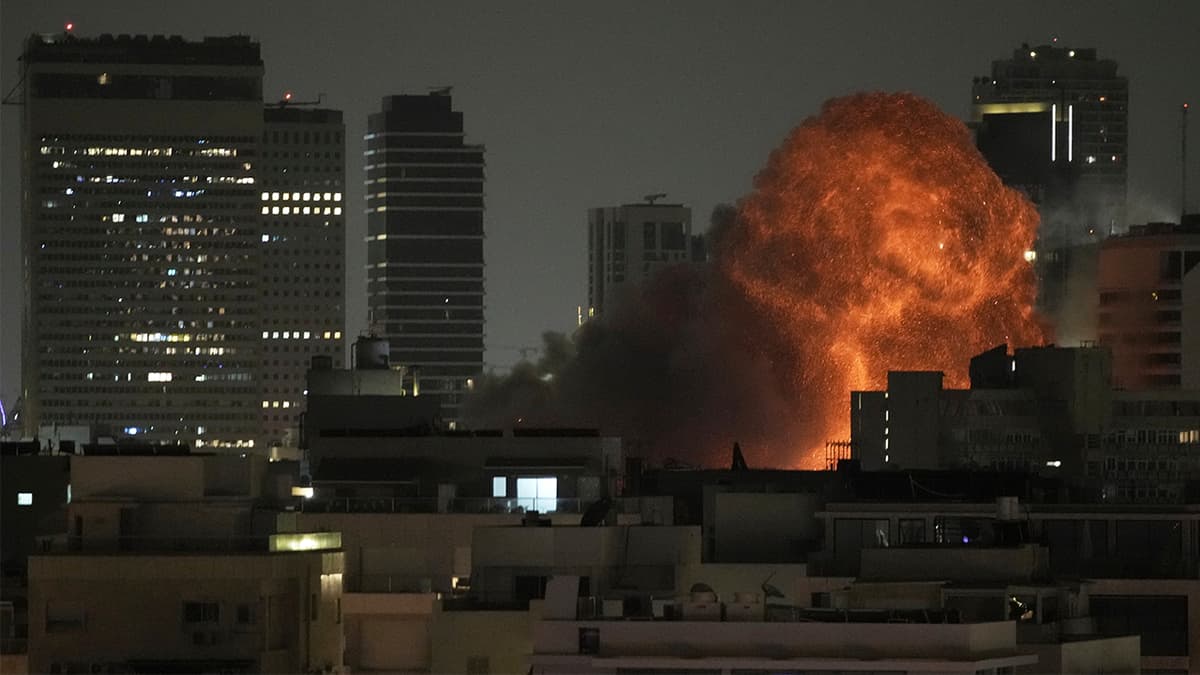
Iran has made one of its most significant military claims of the entire war — announcing direct hits on military targets inside Tel Aviv. Israel has not confirmed the strikes. And in the fog of one of the most complex conflicts in the modern Middle East, the truth is — as always — somewhere between the two competing narratives.
Iran's Islamic Revolutionary Guard Corps announced that its drones and missiles successfully struck military targets inside Tel Aviv — framing the attack as a direct response to recent Israeli and American strikes on Iranian territory.
Iranian state media amplified the claims widely, with footage and statements circulating across social media depicting what IRGC spokespeople described as successful precision strikes against Israeli military infrastructure in and around Tel Aviv.
Iran's army claimed its drones hit Tel Aviv and a northern radar site.
Very little.
No such impacts have been reported by Israeli authorities.
The Israel Defense Forces have not issued a statement confirming damage to any military facility in Tel Aviv. Israeli media — which typically reports quickly and in detail on any successful enemy strike — has not confirmed casualties or structural damage consistent with Iran's claims.
This gap between Iran's claims and Israel's silence is itself a story.
Throughout the 2026 Iran war, both sides have engaged in an intense parallel information war alongside the physical conflict — each with strong incentives to exaggerate their own successes and minimize their own losses.
Iran has repeatedly claimed to have struck targets that Israeli and American sources subsequently denied or downplayed. Israel and the United States have at times been slow to acknowledge damage from Iranian strikes — particularly when those strikes have hit sensitive military infrastructure.
The largest confirmed Iranian strike on Israeli territory killed 4 people and injured 6 — far below the scale of Iran's most dramatic public claims.
What can be confirmed without dispute is the broader context in which tonight's claims are being made:
Iran has launched multiple waves of ballistic missiles and drones at Israel since the war began in February 2026. Some have been intercepted. Some have caused real damage and real casualties. Israeli air defenses — among the most sophisticated in the world — have performed at a high level but are not impenetrable.
Iran struck Israeli targets in Tel Aviv and Haifa as well as countries throughout the Persian Gulf as part of its Operation True Promise IV response to the February 28 US-Israeli strikes.
The pattern established over months of conflict is clear: Iran fires. Israel intercepts most but not all. Some strikes cause damage. Iran claims more than it achieves. Israel confirms less than actually happened.
In a war where information is itself a weapon, the ability to distinguish between claim and confirmed fact is more important than ever.
Unverified reports of mass military casualties — shared without context across social media — can inflame public opinion, trigger political decisions and contribute to escalation cycles that neither side may actually want.
The responsible approach is the one this outlet takes: report what is claimed, report what is confirmed, and make the distinction clear.
Tonight, Iran claims it hit military targets in Tel Aviv. Israel has not confirmed this. The truth will emerge — as it always does, eventually.
DeSanta News will continue to monitor this developing situation and update this article as verified information becomes available.
Subscribe to get the latest articles delivered to your inbox.
No comments yet. Be the first to share your thoughts.
Military / War
Military / War

Military / War