DSN WIRESUN 11 OCT 20260254 UTC
Uncategorized
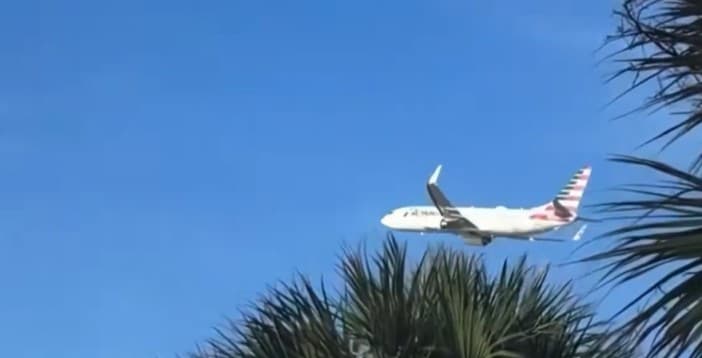
EXPLAINERAmerican Airlines Flight 1760 — a Boeing 737-800 carrying 172 passengers and 9 crew from Myrtle Beach to Charlotte — declared a Mayday on August 10, 2026.
FILED 5 MIN READ
Myrtle Beach, South Carolina — August 10, 2026
Flight 1760 had just lifted off the runway at Myrtle Beach International Airport on Monday morning when it happened. A big bang. An orange flash from the left wing. Flames shooting from the engine. And a pilot's voice on the radio, calm and controlled in the way that the best pilots always are in the worst moments: "Mayday, mayday, mayday. We've got an engine problem here."
All 181 people on board are safe. The Boeing 737-800 is on the ground, out of service and under inspection. And once again, a Boeing aircraft and a dramatic aviation incident are the subject of a global news story.
An American Airlines Boeing 737 hit birds while taking off from Myrtle Beach, South Carolina, Monday, leading to flames shooting from an engine and an emergency landing.
American Airlines Flight 1760, a Boeing 737-800 carrying 172 passengers and nine crew members, had just departed Myrtle Beach International Airport when the left engine ingested several birds. Moments after lift-off, witnesses on the ground and passengers aboard reported loud popping sounds accompanied by bright orange flashes and smoke issuing from the left wing.
According to air traffic control audio retrieved from LiveATC.net, the pilot radioed an urgent distress call shortly after departure: "Mayday, mayday, mayday. We've got an engine problem here."
The 172 passengers aboard Flight 1760 experienced one of the most terrifying moments possible in commercial aviation — the sight of their aircraft on fire, moments after takeoff, over the South Carolina coast.
"In the middle of the runway, everybody heard a big bang, and then the next thing that we know, was making a lot of noise," said John Richter, who was among the passengers on board.
Passenger Patrick Gotwalt recorded a video showing flames coming from the engine as the flight appeared to be flying over water. Another passenger video showed the engine "backfiring like crazy" with one passenger's voice heard saying "I think she is on fire now."
From the beach below, the drama was equally visible. Lindsey Mackey told CNN she was on the beach, heard several loud popping noises and saw orange flashes coming from the left wing.
The professionalism of Flight 1760's flight crew in the moments following the bird strike is a story in itself.
From the moment the birds entered the engine and the Mayday call was declared, the crew executed a controlled turn and return to Myrtle Beach with no panic and no additional incidents.
The flight crew safely executed a turn and landed the aircraft back at Myrtle Beach International Airport. The Boeing 737 taxied to the gate under its own power, and all 181 people onboard deplaned normally with no injuries reported. While emergency response teams assembled on the tarmac, airport operations workers cleared substantial bird debris and feathers off the runway.
The confirmation of the bird strike came not just from passenger video and air traffic control recordings — it was confirmed by the physical evidence left on the runway.
A worker on the radio said a "significant" number of birds were found on the runway and were being removed. Operations workers found the remains of the birds on the runway after the plane circled and returned.
Recovered bird remains have been sent to the Smithsonian Institution for species identification — standard FAA procedure for bird strike incidents that helps build the national wildlife strike database and informs airport wildlife management protocols.
One of the most striking details from the Flight 1760 incident is that the bird strike was independently witnessed and confirmed by another pilot in the area.
"I saw he took up birds, it looked like, at least in the left side engine," another pilot who saw the bird strike said on the radio.
This independent confirmation from a second pilot — reported on air traffic control recordings — removes any ambiguity about what caused the engine fire. This was not a mechanical failure. It was a bird strike. A "significant" number of birds, ingested into the left engine of a Boeing 737-800 at the moment of takeoff.
American Airlines said the plane was taken out of service for inspections. "The aircraft landed safely and has been taken out of service to be inspected by our maintenance team. Our team is working to ensure that customers can depart for Charlotte as soon as possible." Passengers were moved to another plane and made it to Charlotte.
The Federal Aviation Administration confirmed the crew reported striking a bird while departing and announced it will investigate the incident.
Bird strikes — technically called "wildlife strikes" in aviation terminology — are more common than most passengers realize. Animal strikes are not uncommon in aviation. The FAA's Wildlife Strike Database records over 10,000 wildlife strikes per year across US airports — the vast majority causing little or no damage. But when birds are ingested into a jet engine at the moment of takeoff — at maximum thrust, with full fuel load and 181 souls on board — the consequences can be catastrophic.
The most famous bird strike in aviation history occurred on January 15, 2009, when US Airways Flight 1549 lost both engines to a Canada Goose strike immediately after takeoff from LaGuardia and was successfully ditched in the Hudson River by Captain Chesley "Sully" Sullenberger — the "Miracle on the Hudson."
Flight 1760's outcome on August 10, 2026 was far less dramatic — the engine damage appears to have been contained to the left engine without total failure, allowing the crew to execute a controlled return to Myrtle Beach without incident. But the footage of flames shooting from a commercial airliner's engine moments after takeoff, with 181 people on board and a beach full of summer vacationers watching from below, is a reminder of how quickly the ordinary can become extraordinary at 200 feet and climbing.
Flight 1760 adds to what has been an extraordinarily turbulent year for Boeing and the airlines that fly its aircraft in 2026.
A United Airlines Boeing 737 Max lost a wheel during takeoff that struck a light pole and a bakery truck on the New Jersey Turnpike. A Lufthansa Boeing 787 Dreamliner's nose gear collapsed at its gate at Frankfurt Airport, injuring crew and ground workers. A Frontier Airlines plane struck a pedestrian on the runway at Denver International Airport.
Monday's Myrtle Beach incident was caused by birds — not by any manufacturing defect or maintenance failure attributed to Boeing. But in the context of 2026's accumulation of aviation incidents involving Boeing aircraft, every story involving a 737 and a Mayday call attracts scrutiny that it might not have received in a different year.
DeSanta News will continue to follow the FAA investigation into Flight 1760.
Subscribe to get the latest articles delivered to your inbox.
No comments yet. Be the first to share your thoughts.
World

World

World