DSN WIRESUN 11 OCT 20260255 UTC
Military / War
ANALYSISIran struck multiple Kuwaiti power generation and water desalination plants for the fourth consecutive day on August 7, 2026.
FILED 6 MIN READ
Kuwait City, Kuwait — August 7, 2026
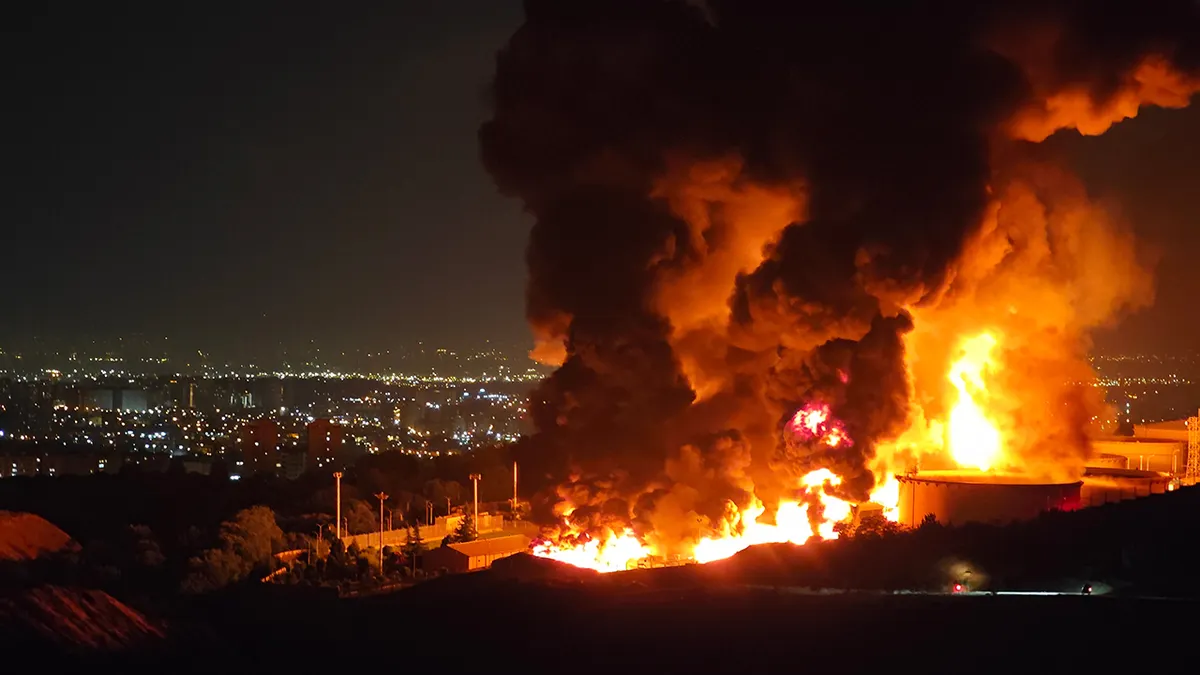
Iran has struck Kuwait's power generation and water desalination infrastructure for the fourth consecutive day — setting fires at multiple facilities, forcing the shutdown of generating units and prompting Kuwait's government to tell its civilian population to ration water and electricity during peak hours. In one of the world's most water-stressed countries, where 90% of drinking water comes from desalination, this is not a military inconvenience. It is an attack on the foundations of civilian life.
Kuwait said Tuesday that several power generation and water desalination plants came under Iranian attacks for a fourth consecutive day, sparking fires at multiple facilities. In a statement, the Ministry of Electricity, Water and Renewable Energy said the attacks took place Monday evening amid ongoing Iranian strikes against the Gulf country. It said emergency teams, working with the Kuwait Fire Force and security agencies, responded immediately and brought the fires under control. Authorities assessed the resulting damage, while technical teams began repair work and efforts to restore the affected facilities.
According to the ministry, several generating units were taken out of service in line with precautionary operating procedures to protect equipment and preserve the stability of Kuwait's electricity and water systems.
Kuwait's Ministry of Electricity, Water and Renewable Energy said that several power and desalination facilities were attacked on Monday evening amid what state-run media KUNA described as "heinous Iranian aggression." The ministry said the attacks caused fires at several facilities, but emergency crews working with firefighters and security agencies managed to extinguish the blazes.
The August 7 attack is not a one-off. It is the fourth consecutive day of Iranian strikes on Kuwait's power and water infrastructure — a sustained campaign of attacks on civilian utilities that has now lasted nearly a week without interruption.
Kuwait said Iran struck another of its power and water plants, leading to the deactivation of several power generation units, a day after a similar attack. The country's Electricity, Water and Renewable Energy Ministry said several power generation units were shut down after the latest Iranian strike. "Another electricity and water distillation plant was targeted by a hostile attack that led to a fire erupting in one of the plant's components," which resulted in the deactivation of some power generation units, the ministry wrote on social media.
The country's energy ministry urged civilians to ration power usage during peak hours after a strike on a power and water desalination plant, causing a fire — the second such attack in two days.
Kuwait's Ministry of Electricity, Water and Renewable Energy confirmed that a service building at one of its power and water desalination plants was damaged in an Iranian attack, leading to the death of an Indian worker and causing significant material losses. Emergency and technical teams were deployed immediately, following established contingency plans, to contain the damage and maintain operations.
One person is dead. Dozens more have been injured across the multiple strikes on Kuwait's energy infrastructure over the past four days. They were not soldiers. They were engineers, technicians and workers keeping the lights on and the water flowing for three million Kuwaiti civilians.
Some 90% of Kuwait's drinking water demand comes from desalination plants. The country operates eight major coastal water desalination plants with a combined operational capacity of more than 2.2 million cubic meters per day. Kuwait ranks as the world's most water-stressed country.
The Iranian strike adds to concerns that other water plants across the Gulf could come under attack as the regional conflict escalates. Iran's military has previously warned that it could target desalination plants and other infrastructure if the United States strikes Iranian fuel and energy facilities.
To understand what Iranian strikes on Kuwait's desalination plants mean in practice, consider the geography and the physics. Kuwait sits in one of the driest regions on earth. It has almost no natural freshwater. Its population of three million people depends almost entirely on seawater converted to drinking water through energy-intensive desalination plants. Without those plants — without the electricity that powers them — Kuwait cannot sustain its civilian population.
Kuwait, Qatar and Bahrain rely on desalination for up to 99% of their daily drinking water. The Gulf region produces 40% of the world's desalinated water across 56 vulnerable coastal plants.
Iran has struck the facility that produces the water that Kuwaiti children drink. Four days in a row.
Kuwait is not the only target. Iran's campaign against civilian water and power infrastructure spans the entire Gulf region.
In Kuwait, two power generation units were shut down after Iranian drone attacks on power and water desalination plants. In Bahrain, Iranian drones struck the Gulf Petrochemical Industries Company, triggering fires in several operational units.
Inside Iran, some 10,000 people in 20 villages faced a disrupted water supply after the US hit a desalination plant on the Iranian coast. Iran described the attack as a war crime. Iran's own strikes, primarily aimed at US allies in the region, have repeatedly hit Kuwait this week.
Both sides are striking water infrastructure. The US struck an Iranian desalination plant serving 10,000 people in 20 villages. Iran is striking Kuwaiti desalination plants serving three million people. Both sides have called the other's strikes war crimes. The civilians on both sides are the ones without water.
Attacks on objects indispensable to the survival of the civilian population — including drinking water installations and irrigation works — are explicitly prohibited under Article 54 of Additional Protocol I to the Geneva Conventions, which prohibits attacking, destroying, removing or rendering useless such objects for the purpose of denying their sustenance value to the civilian population.
Kuwait's desalination plants are, by any legal definition, objects indispensable to the survival of the civilian population. Striking them for the fourth consecutive day — in a country where 90% of drinking water comes from those plants, in summer temperatures exceeding 45°C — is not a grey area under international humanitarian law.
The UAE's Foreign Ministry called the Iranian attacks a "flagrant violation of the three countries' sovereignty and a threat to their security and stability." The international community has condemned the strikes. Iran has continued them.
The US has escalated attacks against Iran since last week, with Iran retaliating with strikes targeting facilities and bases it says are used by the US military in several regional countries. The exchange of fire between the US and Iran comes despite a Pakistan-brokered memorandum of understanding they signed in June to end their war and reach a lasting peace agreement.
The strikes on Kuwait's desalination plants represent the 10th consecutive day of military exchanges between the United States and Iran — a cycle of attack and retaliation that has now lasted longer without interruption than almost any previous episode of the 2026 Iran war.
Iran insists its attacks on Kuwait are aimed at US military assets hosted on Kuwaiti territory. But the facilities being struck are not US military bases. They are power plants and water treatment facilities that the entire Kuwaiti civilian population depends on for survival.
Kuwait's state media described the Iranian attacks as "heinous Iranian aggression." The country's Foreign Ministry has summoned the Iranian ambassador repeatedly. The Kuwaiti Emir has addressed his nation. And still, the strikes continue.
Kuwait has not attacked Iran. It has not provided its territory for offensive operations against Iranian soil. It has simply hosted American military personnel — as dozens of countries around the world do — and it is now watching its power plants burn and its water treatment facilities take fire for the fourth day in a row as a consequence.
DeSanta News will continue to follow the situation in Kuwait and across the Gulf as the Iran war continues.
Subscribe to get the latest articles delivered to your inbox.
No comments yet. Be the first to share your thoughts.
Military / War
Military / War

Military / War