DSN WIRESUN 11 OCT 20260256 UTC
Politics
ANALYSISBritish Prime Minister Keir Starmer announced his resignation outside 10 Downing Street on June 22, 2026.
FILED 4 MIN READ
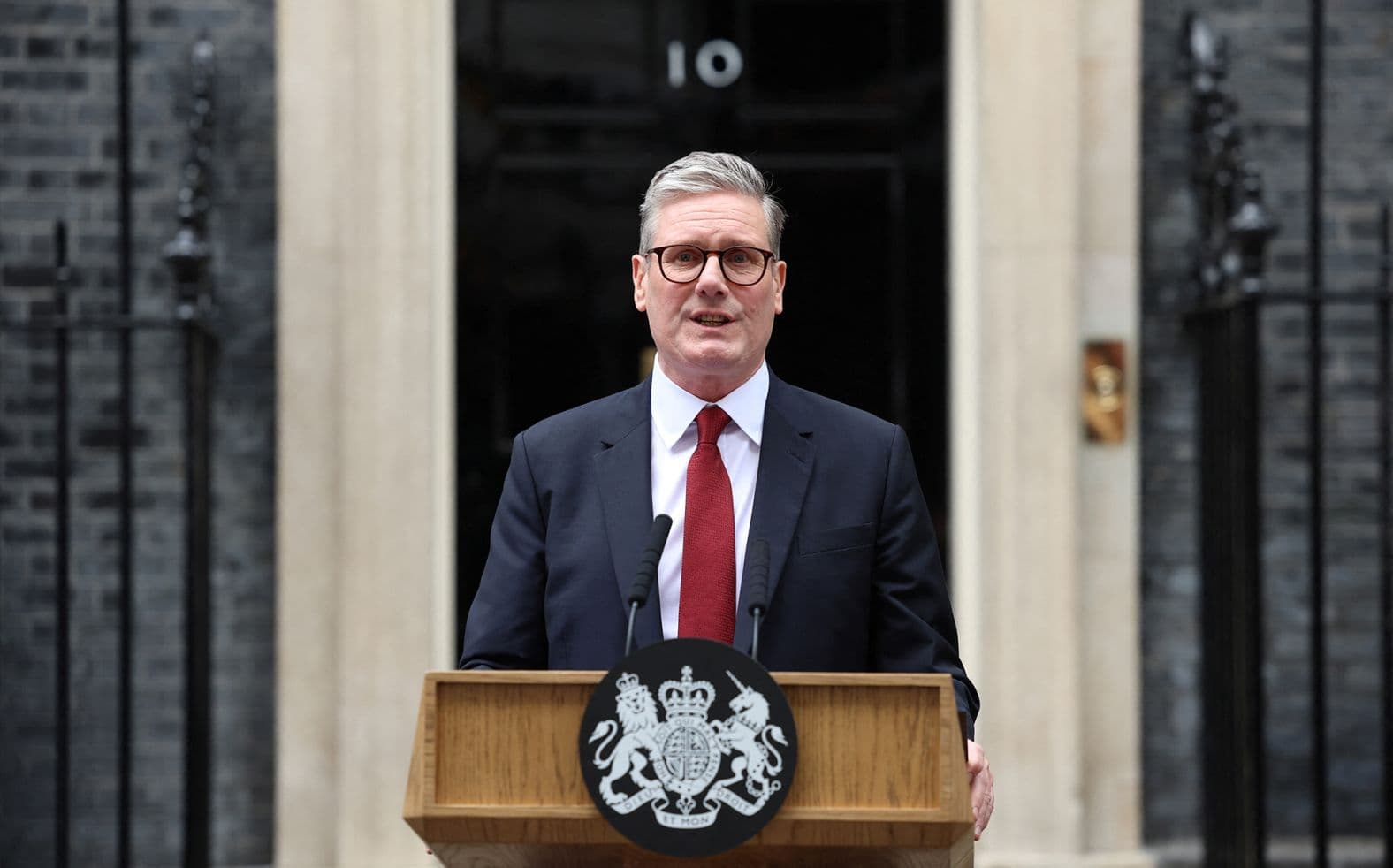
London, United Kingdom — June 22, 2026
Keir Starmer has resigned as Prime Minister of the United Kingdom — becoming the sixth British leader in a decade to leave Downing Street before an election, and paving the way for what could be a dramatic transformation of British politics.
"I will resign as leader of the Labour Party. I have spoken to His Majesty the King this morning to inform him of my decision," Starmer said in a televised statement outside Downing Street. Starmer's voice choked as he talked about the support of his wife, Victoria, and his two children — a rare public display of emotion for the prime minister. "Every decision I have taken has been about putting the country I love first," Starmer said. "That is why I will resign."
Starmer said that nominations to replace him as leader of the Labour Party will open on July 9 and close when Parliament breaks up for its summer recess on July 16. Starmer said a new leader will be chosen by September 1. He would remain in the job as caretaker until a new leader is chosen.
Starmer led Labour to a landslide election victory in July 2024, but since then his popularity and that of the party have plummeted. He has struggled to deliver promised economic growth, repair tattered public services and ease the cost of living, and has been hamstrung by repeated missteps, including his decision to appoint Peter Mandelson — a scandal-tarnished friend of Jeffrey Epstein — as the U.K. ambassador to the United States.
Labour is losing liberal voters to the growing Green Party and facing a rising Reform UK, the Nigel Farage-led anti-immigration party that consistently leads in nationwide opinion polls.
Several ministers from Starmer's government stepped down in recent weeks, with some citing a lack of confidence in his ability to lead. The top two defense officials in the U.K. resigned on June 11, accusing Starmer of failing to invest enough money into the country's Defense Investment Plan.
The announcement clears the path to power for Starmer's likely successor, Andy Burnham, the popular ex-mayor of Greater Manchester who secured a return to Parliament last week. Burnham had planned to challenge Starmer and is widely seen as the best option to turn around the ruling party's fortunes.
Starmer conceded that Labour colleagues had been asking whether he was best placed to lead the party into the next general election. "I have heard the answer of my parliamentary party to that question. And I accept that answer with good grace."
U.S. President Donald Trump weighed in even before the announcement, posting on Truth Social: "Keir Starmer will resign as Prime Minister of The United Kingdom. He failed badly on two very important subjects — IMMIGRATION AND ENERGY (OPEN NORTH SEA OIL!). I wish him well! President DJT."
Hours after the Business Secretary's remarks, Trump posted his prediction — before any official announcement had been made.
The timing was noted widely — Trump appeared to know before the British public did.
Keir Starmer's resignation comes almost 10 years to the day since the U.K. voted to leave the European Union. His successor will be the country's seventh leader in that period, underscoring how political and economic turmoil continue to unsettle British politics long after the Brexit process was concluded.
With his poll ratings rendering him one of the most unpopular Prime Ministers of the century, Starmer has become the sixth British PM to resign from their position rather than losing at an election in the last 10 years.
Despite the domestic chaos, history may judge Starmer more kindly on the world stage.
Starmer has won praise for his international role, notably in rallying European support for Ukraine in its fight against Russia's invasion, and working to mitigate the economic and political turmoil unleashed by the Iran conflict. His decision to keep out of the Iran war — a stance that even Starmer's detractors have since called brave and principled — was one of the defining moments of his tenure.
If no challenger emerges to Burnham he could be in office shortly after the summer recess. If there is a contest, a new leader will be chosen by September 1.
Wes Streeting, who resigned as health secretary last month to protest Starmer's leadership, has said that he will run in a contest if there is one.
Britain now faces its seventh Prime Minister in a decade — and the question being asked in Westminster, in Brussels and in Washington tonight is whether any leader can bring the stability that the United Kingdom so desperately needs.
DeSanta News will continue to follow the Labour leadership contest and Britain's political transition throughout the summer.
Subscribe to get the latest articles delivered to your inbox.
No comments yet. Be the first to share your thoughts.
Politics
Politics

World