DSN WIRESUN 11 OCT 20260513 UTC
Military / War
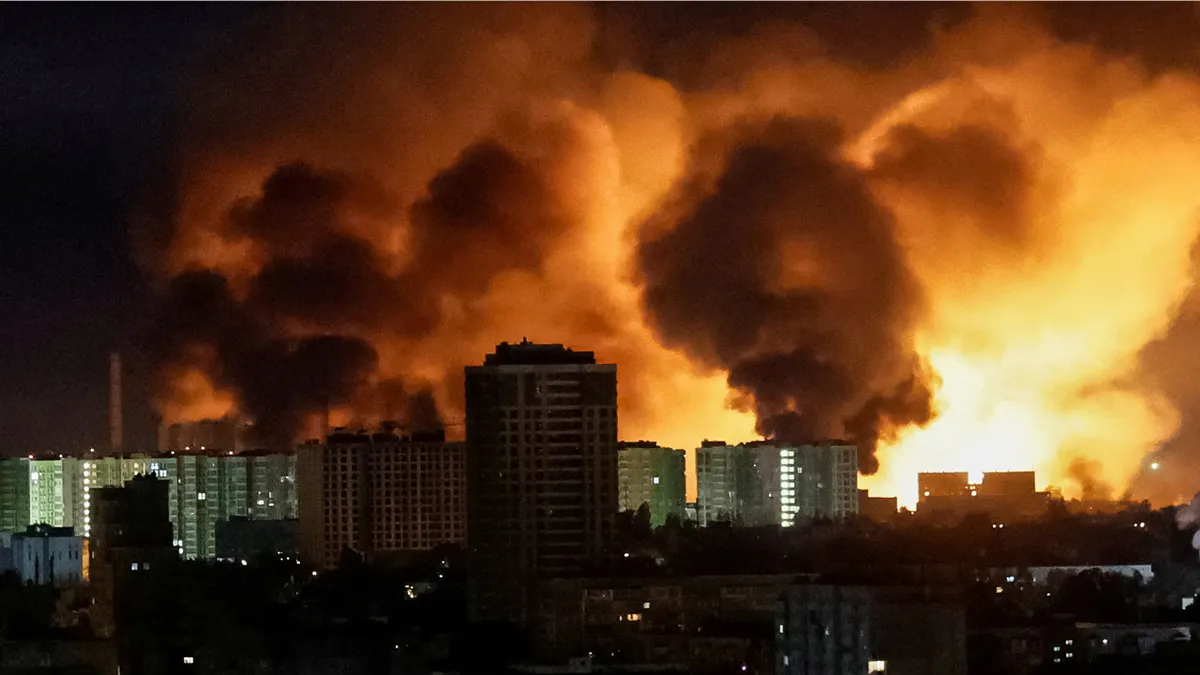
ANALYSISRussia launched 24 ballistic missiles, 4 Zircon/Oniks missiles and 115 drones at Kyiv and the Kyiv region overnight on August 5, 2026, killing 17 people and injuring 44 others.
FILED 5 MIN READ
Kyiv, Ukraine — August 5, 2026
Seventeen people are dead in Kyiv this morning. Not because Ukraine's air defense failed to try. Because Ukraine's air defense has run out of the missiles it needs. Russia fired 24 ballistic missiles at the Ukrainian capital overnight — and Ukraine could not intercept a single one.
Russian missile and drone strikes on Kyiv and the surrounding region killed 17 people and wounded 44 others overnight into Wednesday, Ukraine's President Volodymyr Zelenskyy said. Russia fired 24 ballistic missiles, four other missiles identified as either hypersonic Zircons or supersonic Oniks, and 115 drones, many of them jet-powered, in the attack.
Ukraine's Air Force said Russia launched 24 Iskander-M or S-400 ballistic missiles, four Zircon or Onyx missiles, and 115 Shahed-type and other drones. A significant number of the UAVs were reportedly jet-powered. Ukrainian forces shot down or electronically suppressed 98 drones. None of the ballistic missiles were intercepted. Missile and drone impacts were recorded at 26 locations, while debris fell at six more.
The most devastating detail of the August 5 attack is not the scale — it is the failure rate. Ukraine intercepted 98 of 115 drones — a success rate of approximately 85%. It intercepted zero of 24 ballistic missiles. Zero of four Zircon/Oniks missiles.
Ukrainian air defences downed nearly 90% of the 115 drones launched by Russia but failed to intercept a single one of the 24 ballistic missiles and four Zircon cruise missiles, the air force said.
The intensified barrages are exploiting Ukraine's critical shortage of interceptor missiles for the US-made Patriot systems, the sole air defense system in its arsenal able to shoot down ballistic missiles. Zelenskyy has pleaded with other countries to send more of the ammunition made scarcer by the Iran war.
The Iran connection is crucial. US Patriot interceptor missile stocks — already limited — have been depleted further by the demands of the 2026 Iran war, where American forces have been firing Patriot missiles to defend Gulf states from Iranian ballistic missile and drone attacks. The same weapons system that could protect Kyiv is protecting Kuwait, Bahrain and the UAE. There are not enough interceptors for everyone.
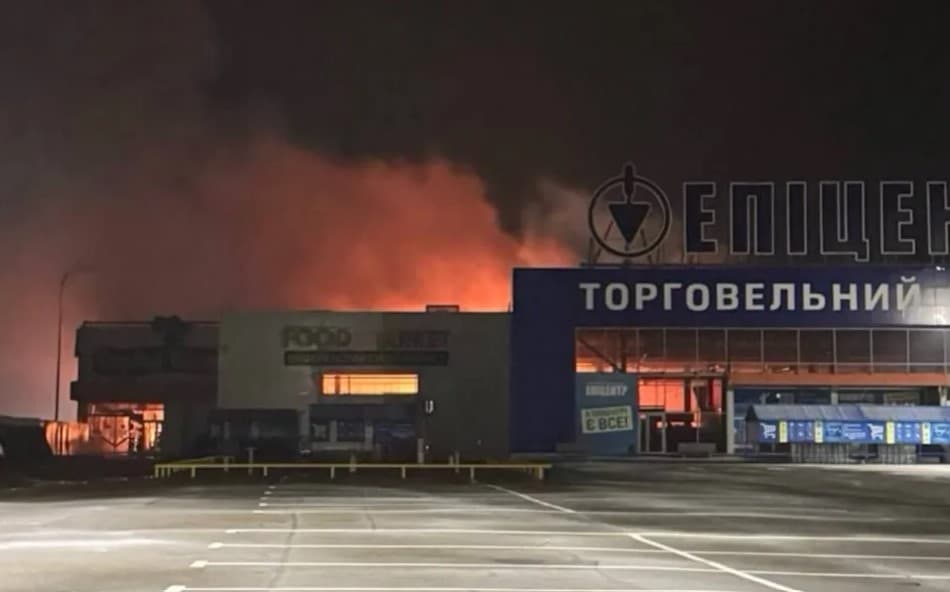
The main targets included warehouses belonging to civilian companies, logistics hubs, infrastructure, and a railway station. Among the facilities struck were sites operated by Epicentr, ROZETKA, Fozzy Group, and Nova Poshta.
An aerial view shows a massive column of smoke rising above Kyiv from a burning NOVUS supermarket chain warehouse following the Russian ballistic missile attack.
Russia's Defense Ministry claimed it had struck "transport, logistics and distribution centers" involved in military supply chains — the same justification it uses every time it destroys civilian warehouses, shopping centers and logistics hubs across Ukraine. Ukraine denied all the targets were military.
Epicentr — Ukraine's largest home improvement retailer. ROZETKA — Ukraine's largest e-commerce platform, equivalent to Amazon. Fozzy Group — one of Ukraine's largest food retail and distribution companies. Nova Poshta — Ukraine's primary parcel delivery service used by millions of ordinary citizens every day.
A brewing company was destroyed. A railway station was struck.
In Kyiv, the attack caused damage in the Holosiivskyi, Obolonskyi, Desnianskyi, and Sviatoshynskyi districts.
In July, Russian attacks killed at least 377 civilians and wounded 2,129 others in Ukraine, making it the deadliest month of the invasion there since April 2022, as the more than four-year-long war grinds on.
The August 5 attack did not come in isolation. It came after the deadliest month for Ukrainian civilians since April 2022. It came after Russia struck Kyiv twice in five days in early July. It came as the same pattern of ballistic missile attacks that have been escalating throughout 2026 — enabled by Ukraine's shrinking ability to intercept them.
Ukrainian President Zelensky was unsparing in his Wednesday morning message. He confirmed the death toll. He confirmed the scale of the attack. And then he said what he has been saying for months — with new and terrible urgency:
"Ballistic missile interceptors — these are what could have saved the lives of those who died today. It is very important that our partners understand that delays in supplying them, or an unwillingness to provide anti-ballistic systems, lead directly to such horrific casualties and destruction."
"A significant share of Russia's ballistic missile production is still not under sanctions. This needs to change. New steps are needed — from the G7, the European Union, and everyone who supports the protection of life."
The logic is clear and the evidence is overwhelming. Russia fires ballistic missiles at Kyiv. Ukraine cannot intercept them because it has run out of Patriot interceptors. People die. Zelensky asks for more interceptors. Some partners provide them. More are needed. Russia fires more ballistic missiles.
And the people of Kyiv go to sleep each night not knowing if tomorrow morning they will wake up — or whether a ballistic missile traveling at many times the speed of sound will reach their home before any warning can be given.
It was the 14th Wildberries warehouse to catch fire in less than three weeks, according to a Ukrainian tally. Ukraine says the company provides goods that can be used by the military. Kyiv is also keen to unsettle the Russian public with high-profile attacks.
One drone crashed into a Wildberries sorting center, setting it ablaze.
On the same night Russia was firing 24 ballistic missiles at Kyiv's civilian warehouses, Ukraine was striking Wildberries for the 14th time in three weeks — a deliberate campaign to bring the economic consequences of the war to ordinary Russian consumers.
The symmetry is intentional. Russia destroys Ukrainian warehouses. Ukraine destroys Russian warehouses. The difference is that Russia uses ballistic missiles that travel faster than the speed of sound and cannot be intercepted. Ukraine uses drones that can be shot down — and that Russia has been shooting down in significant numbers.
The August 5 attack is not an escalation. It is a continuation. Russia has been launching increasingly large ballistic missile barrages at Kyiv throughout the summer of 2026 — barrages that have become more deadly with each passing week as Ukraine's interceptor stockpiles shrink.
Zelensky has asked for Patriot interceptors from the G7, from the EU, from anyone who will provide them. Some have been delivered. Not enough.
The deadly assault underlines the worsening danger for urban civilians far from the front lines, as Ukraine grapples with perilously low stocks of missile interceptors.
The 17 people who died in Kyiv on the morning of August 5, 2026 did not die because Russia's missiles could not have been stopped. They died because Ukraine did not have the weapons to stop them.
DeSanta News will continue to follow this story throughout Wednesday August 5.
Subscribe to get the latest articles delivered to your inbox.
No comments yet. Be the first to share your thoughts.
Military / War
Military / War
Military / War