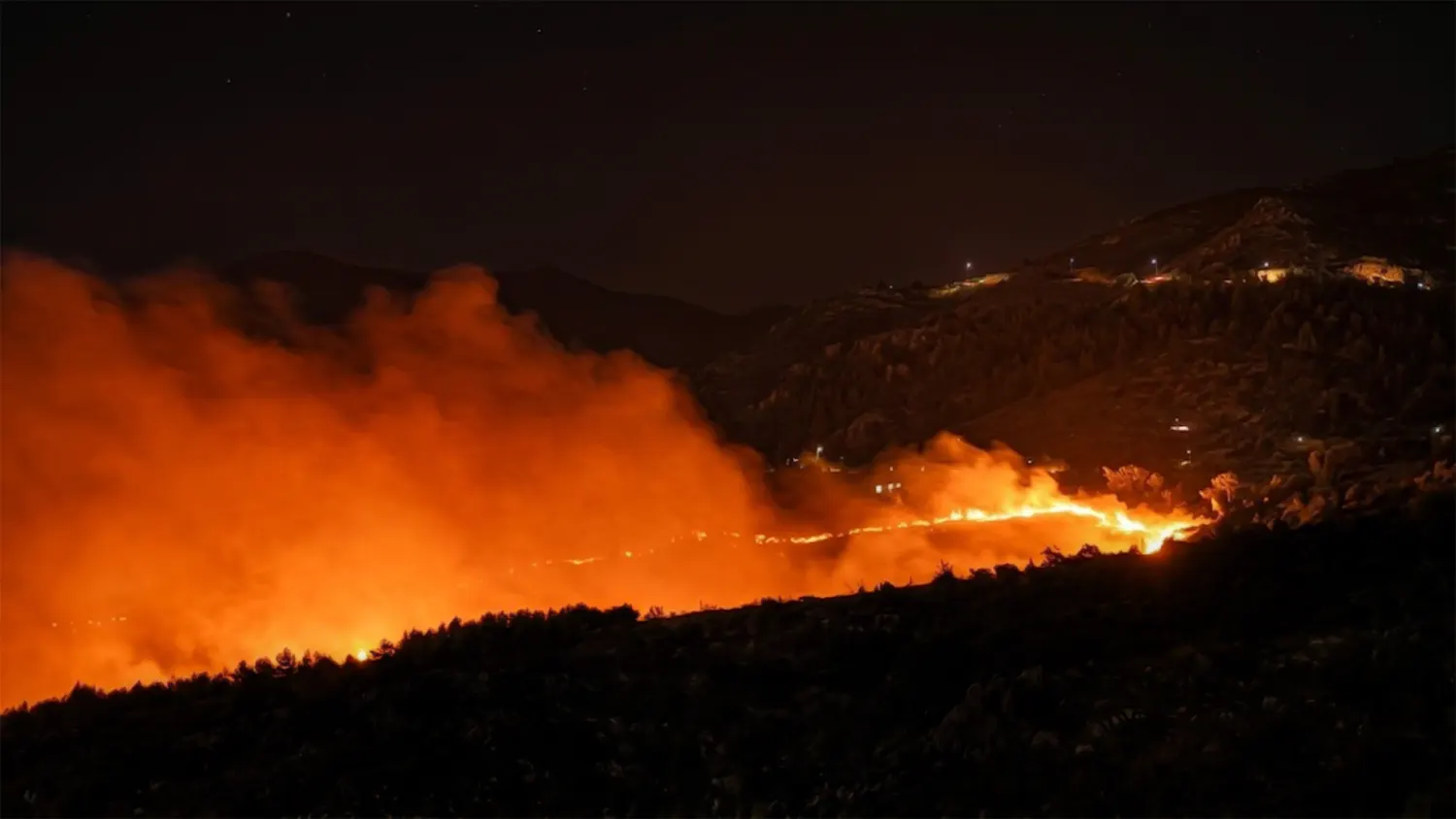
DSN WIRESUN 11 OCT 20260254 UTC
World
ANALYSISEurope's first total solar eclipse in 27 years swept across northern Spain on the evening of August 12, 2026.
FILED 5 MIN READ
Northern Spain — August 12, 2026
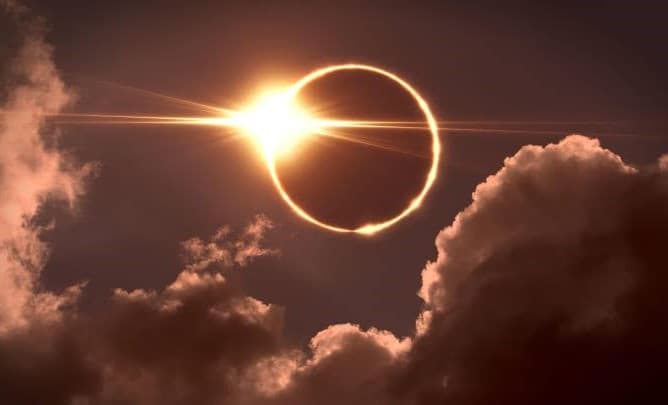
For 2 minutes and 18 seconds on the evening of Wednesday August 12, 2026, the sun disappeared over northern Spain. The moon slid in front of it — perfectly, completely, with the precision that only orbital mechanics can achieve — and day became night. Crickets sang. Stars appeared. The temperature dropped. And millions of people across Europe looked up at the sky and fell silent.
Europe's first total solar eclipse in 27 years had arrived.
Today, millions of people across Europe experienced their first total solar eclipse in 27 years, as the Moon began to block the Sun starting at 15:34 GMT, eventually turning day into sudden night for about two minutes along the path of totality.
During the evening of Wednesday, August 12, 2026, a total solar eclipse was visible from the Iberian Peninsula, marking the first such event in over a century. The path of totality crossed Spain from west to east passing through numerous provincial capitals from La Coruña to Palma including Oviedo, León, Bilbao, Zaragoza and Valencia.
On August 12, 2026, a total solar eclipse traced a narrow path of totality across a remote region of Siberian Russia, eastern Greenland, the west coast of Iceland, northern Spain and a tiny section of Portugal. The maximum duration of totality was 2 minutes and 18 seconds.
The eclipse path entered Spain from the northwest in Galicia around 19:27 local time and exited over the Balearic Islands around 20:35 local time. The path was approximately 290 kilometers wide across Spain — unusually broad for a total solar eclipse.
The 2026 eclipse was remarkable for the breadth of its path of totality, covering around 40% of Spain. While most total solar eclipses feature a path no wider than 200 kilometers, this eclipse's path spanned an impressive 290 kilometers, allowing even more people to witness totality.
The cities fortunate enough to fall within the path of totality included some of Spain's most beautiful and historically significant urban centers: A Coruña, Santander, Bilbao, Oviedo, León, Burgos, Zaragoza, Teruel, Valencia and Palma de Mallorca. Both Madrid and Barcelona — Spain's two largest cities — fell just outside the path and experienced only a deep partial eclipse.
After nearly 120 years without a total solar eclipse in the Iberian Peninsula and the Balearic Islands, Spain became the epicenter for eclipse enthusiasts from around the globe.
On August 12, 2026, the first total solar eclipse for mainland Europe since 1999 was visible from parts of Russia, Greenland, Iceland and Spain.
The last total solar eclipse visible from continental Europe occurred on March 29, 2006. Before that, the most famous European eclipse of the modern era was the August 11, 1999 total eclipse — the last to cross the European Union's continental territory before today — which was viewed by an estimated 350 million people across France, Germany, Romania, Hungary, Bulgaria and Turkey.
For Spain specifically, the wait has been even longer. The next eclipse visible as total from Spain will occur on August 2, 2027. An annular solar eclipse will be visible shortly after, on January 26, 2028. It will not be possible to observe another total solar eclipse from Spain until 2053.
A total solar eclipse is one of the most extraordinary phenomena a human being can witness. No photograph or video fully captures what it feels like to stand on the path of totality when the moon completes its passage across the sun.
Starting at 15:34 GMT, the brightness of the daylight hours gradually began to be interrupted as the moon began to block the sun, eventually turning day into sudden night for about two minutes along the path of totality.
The sequence unfolds over more than an hour. First, the sun begins to look like a crescent — a bite taken out of it by the moon, slowly growing larger. The light changes quality before it changes intensity — becoming flat, strange, shadowless. Then the world cools. Animals behave as though evening has arrived. The remaining crescent of sunlight narrows to a sliver. And then — totality.
For 2 minutes and 18 seconds over northern Spain on August 12, 2026, the corona became visible — the sun's outer atmosphere, usually impossible to see because of the overwhelming brightness of the solar disk, suddenly revealed as a shimmering white halo surrounding a black circle in a darkened sky. Planets and bright stars appeared. The horizon glowed with the colors of 360-degree sunset. And then the sliver of sunlight reappeared on the opposite limb of the moon, and the world returned.
Because the eclipse occurred about 2.2 days after perigee on August 10, 2026, the Moon's apparent diameter was larger than usual — making the totality particularly complete and the corona particularly dramatic.
Occurring just one day before the peak of the Perseid meteor shower, the event offered a rare astronomical double feature for sky watchers across Europe — totality on August 12 followed by the year's best meteor shower display in the following nights.
Today's eclipse is the first of three extraordinary solar events crossing Spain in consecutive years — a once-in-many-generations celestial gift to the Iberian Peninsula and its neighbors.
This eclipse will be followed by two more. On 2 August 2027, a total solar eclipse is visible from Spain, northern Africa and the Middle East. And on 26 January 2028, an annular eclipse can be seen from South America, Portugal and Spain.
For a country that waited 120 years for its first total solar eclipse, Spain now finds itself at the center of the astronomical universe for three consecutive years.
In a year defined by war in the Middle East, earthquakes in Venezuela and Colombia, migration crises in Ceuta and wildfires from Scotland to California — two minutes and eighteen seconds of total darkness over northern Spain offered something different.
A shared moment. A shared sky. Millions of people in dozens of countries — in Bilbao and Reykjavik, in León and Galway, watching the same thing happen at the same time, all of them small under an enormous universe that operates on timescales and scales that make even the worst of human conflicts feel temporary.
The eclipse doesn't care about the war. The moon doesn't pause for politics. The corona appears whether or not we deserve it.
For 2 minutes and 18 seconds today, the sky reminded us of that.
DeSanta News will continue to cover the reaction to Europe's total solar eclipse and the scientific observations gathered during totality.
Subscribe to get the latest articles delivered to your inbox.
No comments yet. Be the first to share your thoughts.
World

World

World