DSN WIRESUN 11 OCT 20260515 UTC
Military / War
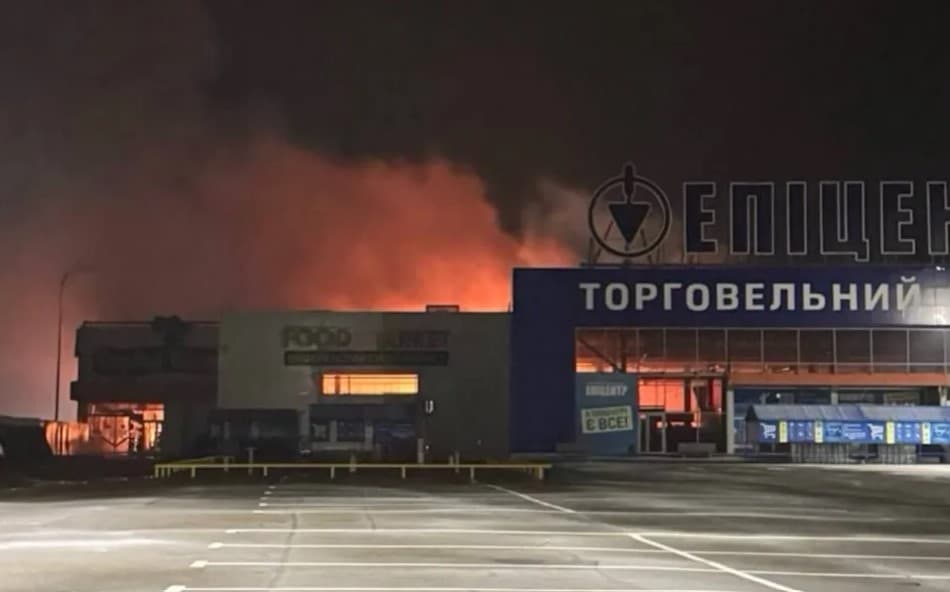
ANALYSISUkraine struck a tanker and four shadow fleet cargo ships in the Black Sea and Sea of Azov on July 22, 2026, while simultaneously hitting logistics hubs supplying Russian drone components in Krasnodar and Stavropol, and another oil depot.
FILED 5 MIN READ
Krasnodar / Stavropol / Black Sea / Kyiv — July 22, 2026
Ukraine's simultaneous campaign against Russia's energy revenues, drone supply chain and maritime logistics reached new intensity on Tuesday July 22 — with Zelensky confirming strikes on logistics hubs in two southern Russian regions, another oil depot and five more vessels from Russia's shadow fleet, as the total number of ships struck in July alone reached 183.
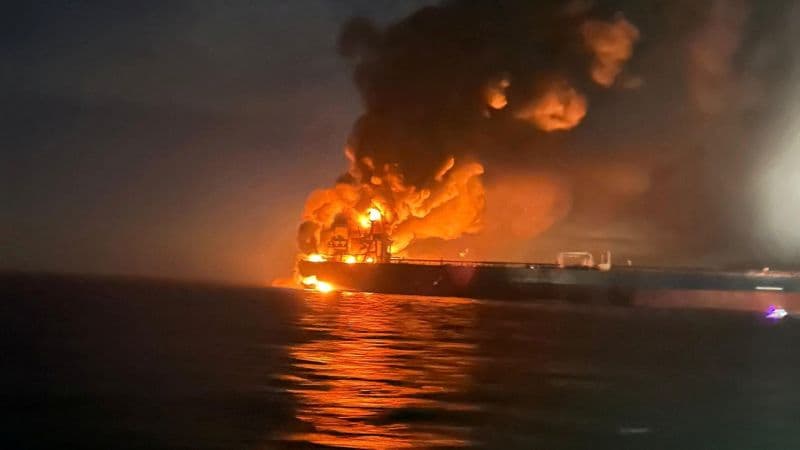
Zelensky announced successful strikes by the Defence Forces on logistics centres in the Krasnodar and Stavropol regions, an oil depot, as well as a tanker and four vessels of the Russian shadow fleet on July 22, 2026.
President Zelensky confirmed: "Today, Ukraine's long-range sanctions successfully hit important targets in the Krasnodar and Stavropol regions — logistics centers involved in supplying the Russian army with drone components, navigation equipment, and other military hardware, as well as another oil depot." He added that a tanker and four dry cargo vessels from Russia's shadow fleet were also struck in the Black and Azov seas.
"Due to fires at industrial facilities, flammable materials are detonating — the sound is audible in Stavropol," Stavropol Krai Governor Vladimir Vladimirov said on his Telegram channel, reporting no casualties.
Ukrainian drones struck Wildberries logistics centers in Russia — two major logistics hubs belonging to Russia's largest online retailer were hit in overnight operations.
This marks the second confirmed strike on Wildberries logistics infrastructure in recent weeks. The company's warehouses and fulfilment centers have been confirmed as storing and distributing not just consumer goods but sanctioned components and military supplies — making them legitimate military targets under international humanitarian law, Ukrainian officials say.
The strikes in Krasnodar and Stavropol targeted what Ukraine described as supply hubs used to move drone components and navigation equipment to Russian forces on the front line. Both regions sit in southern Russia — well south of Moscow but still hundreds of kilometers from the Ukrainian border — demonstrating the increasing operational depth of Ukraine's drone campaign.
The shadow fleet strikes confirmed today are part of one of the most remarkable maritime campaigns in modern warfare.
The operation, whose acronym translates from Ukrainian as "Moscow will fall because of Crimea," began on July 6 and aims to disrupt Russia's shadow fleet and logistics. Commander Robert "Madyar" Brovdi claimed that Ukrainian forces had struck 183 vessels between July 1 and 20, including 119 in the Azov Sea and 64 in the Black Sea.
One hundred and eighty-three ships in twenty-one days. Nearly nine per day. The scale of Ukraine's maritime campaign is without precedent in this war — and the consequences for Russia's ability to earn sanctioned oil revenues and supply occupied Crimea are now becoming measurable.
Ukraine has struck a Russian "shadow fleet" oil tanker in the Mediterranean Sea with aerial drones — the Qendil — sustaining critical damage, located off Libya's coast, more than 2,000 km from Ukraine. "This development reflects a stark expansion of Ukraine's use of uncrewed aerial systems against maritime assets associated with Russia's sanctioned oil export network," officials said.
The shadow fleet is not just being struck in the Black Sea. It is being struck in the Azov Sea, the Mediterranean and now off the coast of Libya. Ukraine is hunting Russian oil ships across the world's oceans.
As part of a separate campaign dubbed "Crimean Switch Off," Ukrainian drones targeted seven energy hubs and electrical substations in Yalta, Morske, Pryvitne, Luchyste, and other locations in occupied Crimea.
The simultaneous targeting of Crimea's energy infrastructure, its fuel supply through shadow fleet disruption, and its road and ferry supply routes through the Logistics Lockdown campaign represents a comprehensive effort to make Russian occupation of the peninsula economically and militarily untenable.
Crimea has no civilian fuel. Power substations across the peninsula are being systematically destroyed. The ferry route across the Kerch Strait — the backup supply line — has been struck repeatedly. The peninsula that Russia annexed in 2014 and built a bridge to supply is being methodically cut off from the Russian mainland.
Zelensky concluded his statement: "We are, quite justly, bringing the war back home — to Russia. Peace is needed, and Ukraine has presented the Russian side with every proposal. They must be forced to turn to diplomacy. Glory to Ukraine!"
The phrase "bringing the war home to Russia" is not rhetorical. It is a precise description of what Ukraine has been doing throughout July 2026 — striking the Moscow region, Siberia, the Black Sea, the Mediterranean, and now Krasnodar and Stavropol in a single coordinated campaign that has forced Russian civilians to experience in their own cities and regions what Ukrainian civilians have been living with since February 2022.
Today's strikes follow an extraordinary week of Ukrainian long-range operations:
July 19 — Three oil depots in Stavropol struck simultaneously, plus a fourth fuel facility. Three shadow fleet tankers hit in the Black Sea. July 20 — Oil depot and Moscow Oblast logistics facilities struck. Six Black Sea vessels hit. Ukrainian drones struck the FSB coordination center in occupied Kherson. July 21 — Logistics centers in Krasnodar and Stavropol struck. Five more shadow fleet vessels hit. July 22 — Same regions struck again. Five more vessels hit. Wildberries logistics hubs destroyed.
The consistency and frequency of the strikes reflects a Ukrainian military that has moved from episodic long-range operations to a sustained, systematic and geographically expanding campaign against Russia's economic and military infrastructure.
Russia's fuel crisis is deepening. Its shadow fleet is shrinking. Its drone supply chains are being disrupted. And its refinery capacity — from Siberia to the suburbs of Moscow — is being systematically demolished.
DeSanta News will continue to follow Ukraine's long-range operations campaign as it develops.
Subscribe to get the latest articles delivered to your inbox.
No comments yet. Be the first to share your thoughts.
Military / War
Military / War

Military / War