DSN WIRESUN 11 OCT 20260512 UTC
Military / War
ANALYSISA Ukrainian drone struck a crowded beach in the village of Arkhipo-Osipovka near Gelendzhik on Russia's Black Sea coast on August 3, 2026, killing 7 people including 3 children and injuring 40 others.
FILED 5 MIN READ
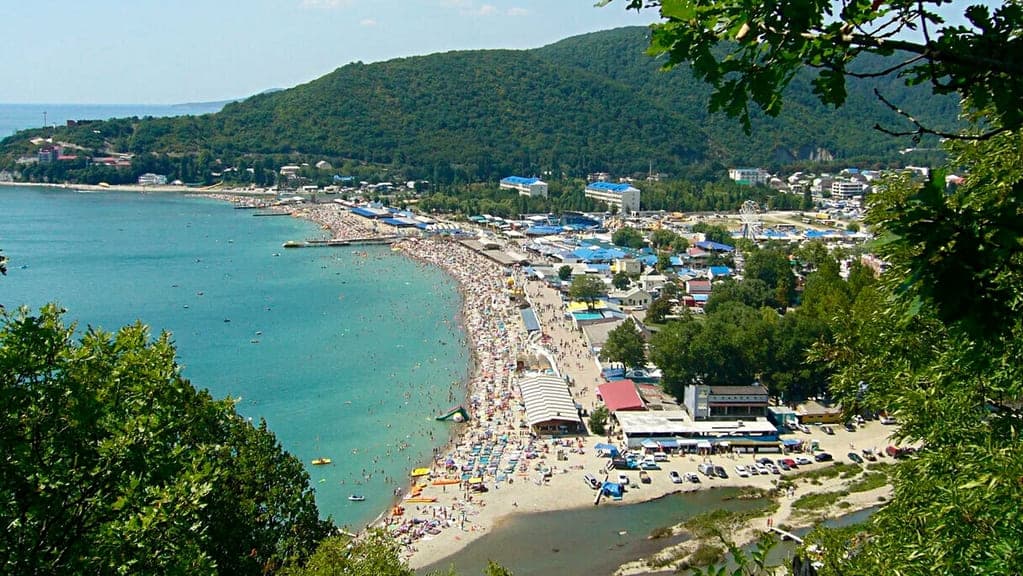
Arkhipo-Osipovka, Krasnodar Krai, Russia — August 3, 2026
Families were on the beach. Children were in the water. The sky was clear and the Black Sea summer afternoon was unfolding the way it does in the popular Russian resort village of Arkhipo-Osipovka — until a Ukrainian drone crashed onto the sand and killed seven people, three of them children.
At least seven people were killed in southern Russia on Monday after debris from a Ukrainian drone fell onto a crowded beach, according to local officials, in one of the deadliest incidents in recent weeks. Three of those killed in the incident in a Black Sea resort area in the city of Gelendzhik were children. A further 40 more people were injured in the incident.
A video showed what appeared to be a drone crashing onto a busy beach at the resort of Arkhipo-Osipovka, on the Black Sea coast, as tourists looked on from the shore and in the sea.
The death toll on the beach in Gelendzhik rose to seven, including three children and four adults. About 40 people were injured and 17 were hospitalized. Four of them, including two children, are in serious condition.
One of the most disturbing details of the Arkhipo-Osipovka strike is that the air raid warning system — which is supposed to give civilians time to take cover before a drone or missile reaches populated areas — failed to activate.
The Ukrainian drone crashed on a beach with vacationers at the Russian Black Sea resort as the warning system failed to sound.
Beachgoers had no warning. No sirens. No time to take cover. The first indication that something was wrong was the drone itself, visible in video footage descending toward the crowded shoreline before impact.
It is unclear whether the incident was caused by the drone being shot down by Russian air defenses or the drone crashing. Regional governor Veniamin Kondratiev said the people on the beach were killed "when debris from a UAV fell."
The question of whether the drone hit the beach deliberately or was diverted there by Russian air defense systems has significant implications. If Russian air defenses intercepted the drone but diverted its trajectory onto the beach — a pattern documented in multiple previous Ukrainian strikes on Russian territory — then the civilian deaths may be the result of Russia's own defense systems redirecting a weapon onto its own citizens.
This is not a theoretical possibility. The most deadly single Ukrainian missile strike on Russian civilians occurred in Sevastopol in 2024, when a US-supplied ATACMS missile was damaged by Russian air defenses and detonated its cluster munition warhead over a crowded beach, killing four people including two children and injuring over 150 others. Russian officials acknowledged in that case that their own air defense system was responsible for the trajectory change.
Ukraine has not yet commented on the Arkhipo-Osipovka strike.
Ukraine says it does not deliberately target civilians. When asked about beach and resort strikes, Ukrainian officials have consistently argued that Russia's systematic targeting of Ukrainian civilian population centers — killing hundreds of civilians every month — renders Ukraine's long-range campaign against Russian military and economic infrastructure a legitimate and proportional response.
The moral calculus being applied by Kyiv is brutal but internally consistent: Russia kills Ukrainian children in Kyiv, Kharkiv and Sumy on a near-daily basis. Ukraine strikes Russia's oil refineries, military factories and shipping. If Russian civilians are killed as a consequence of that campaign — whether by direct impact or by redirected air defense interceptors — Ukraine places moral responsibility on the Russian government that launched the war.
That argument is coherent. But it does not bring back three children from a beach in Krasnodar.
This is not the first time Ukrainian forces have targeted Russian resorts. Just last week, 12 people, including five children, were killed when drones struck a hotel in the town of Kirillovka in Russia's Zaporizhzhia Region. The popular holiday destination lies more than 100 km from the nearest front line and has no military facilities nearby. Another major tragedy occurred in 2024, when four people, including two children, were killed and more than 150 others injured after the Ukrainian military fired five US-supplied ATACMS missiles at the Crimean city of Sevastopol.
The accumulation of Ukrainian drone and missile strikes on Russian resort areas, beaches and holiday destinations represents a pattern that has become one of the most contested aspects of the 2026 war. Ukrainian officials argue that Krasnodar Krai is a legitimate military target due to the region's oil refinery infrastructure — including the Slavyansk ECO refinery that has been repeatedly struck — and the presence of military logistics and supply facilities. Critics argue that striking beaches where families are on holiday is indistinguishable from the Russian targeting of Ukrainian civilian areas that Ukraine itself condemns.
Over the past month, Ukraine has edged up lethal strikes on Russia, targeting energy infrastructure, factories making weapons, military hardware sites and shipping facilities. That same month in Ukraine, Russian attacks killed at least 377 civilians and injured 2,129 others, making it the deadliest month of the invasion since April 2022.
The numbers make the asymmetry clear. In the same month that Ukraine struck Russian beaches and resorts — killing dozens of Russian civilians — Russia killed 377 Ukrainian civilians and injured over 2,000 more across Ukraine. Russia bombed apartment buildings in Kyiv twice in five days. Russia struck a shopping center in Sumy and then bombed the firefighters. Russia hit a playground in Kharkiv.
The civilian dead are real on both sides. The scale is not comparable. But the images from a beach in Arkhipo-Osipovka on Monday afternoon — families on a summer holiday, children in the water, a drone descending from the sky — will be with those who survived for the rest of their lives.
Russia's Governor Kondratyev has called the attack a "deliberate strike by the Kiev regime against civilians." Russia will demand a response. Ukraine has not commented. The war that has destroyed Kyiv's apartment buildings and Krasnodar's beach resorts continues.
DeSanta News will continue to follow this story as Ukraine's position on the strike becomes clear.
Subscribe to get the latest articles delivered to your inbox.
No comments yet. Be the first to share your thoughts.
Military / War
Military / War
Military / War